PRP therapy
What is PRP therapy?
PRP therapy (platelet-rich plasma therapy) is a type of regenerative medicine that promotes tissue repair by concentrating platelets from the patient's own blood and injecting them into the affected area.
In addition to red and white blood cells, human blood contains a component called platelets. Platelets contain growth factors that help repair damaged tissue. PRP is made by concentrating and activating blood platelets, which contain a large amount of growth factors and have the effect of repairing tissue and suppressing inflammation.

How PRP works
Because PRP therapy uses your own blood, it has a low risk of side effects and is attracting attention as a treatment that maximizes the body's own healing ability.
PRP is thought to have the following effects:
1. Repair and regeneration of tissue
The growth factors contained in platelets promote the repair of damaged tissue and stimulate the production of new cells, thereby promoting the recovery of damaged areas.
2. Anti-inflammatory effect
Platelets contain growth factors that have anti-inflammatory properties, and are expected to have the effect of calming inflammation and reducing pain.
Symptoms and problems that can be improved with PRP therapy
*The therapeutic effects of regenerative medicine vary from person to person.
orthopedic surgery
Osteoarthritis (knees, hips, feet, fingers, etc.)
Tennis elbow or golfer's elbow (inflammation of the outside or inside of the upper arm bone)
Baseball elbow (injury to the ligaments on the inside of the elbow)
Achilles tendonitis
Jumper's knee (patellar tendonitis)
Plantar fasciitis
Carpal tunnel syndrome
Sprains and ligament injuries
meniscal injury
Muscle strain
Tendonitis
Fatigue fractures, etc.
dermatology
Thinning hair
Treatment of refractory ulcers
Treatment of burns, etc.
oral surgery
Promoting healing after tooth extraction
Promoting bone regeneration after implant treatment
Periodontal disease treatment, etc.
Cosmetic medicine
Improve wrinkles and sagging skin
Skin Rejuvenation
Improvement of acne scars, etc.
Growth factors contained in PRP
FGF (fibroblast growth factor)
It is a type of growth factor involved in angiogenesis and wound healing, and plays an important role in the proliferation and differentiation processes of a wide range of cells and tissues.
EGF (transforming growth factor)
A growth factor produced by various cells such as epithelial cells and endothelial cells, involved in regulating the migration and proliferation of mesenchymal cells, promoting the proliferation and regeneration of damaged tissue.
TGF-β (transforming growth factor)
Growth factors regulate cell proliferation, growth, differentiation and motility, and also play an important role in the reconstruction of cell tissues, wound healing, inflammation and immunity.
IGF (insulin growth factor)
A growth factor that has a wide range of effects, including promoting cell proliferation and differentiation and protein assimilation, and is produced by growth hormone, which is secreted in large amounts during puberty.
PDGF (Platelet-derived Growth Factor)
A growth factor produced by various cells such as epithelial cells and endothelial cells that is involved in regulating the migration and proliferation of mesenchymal cells, promoting the proliferation and regeneration of damaged tissues.
VEGF (vascular endothelial growth factor)
It is a growth factor that plays an important role in angiogenesis, inducing cell division and differentiation, resulting in the formation of new blood vessels that branch off from existing blood vessels.
Flow of PRP therapy
1. Doctor's examination and counseling
If your suitability for PRP therapy is confirmed during your consultation and you agree to the treatment, it can be performed on the day of your appointment.
2. Blood collection
3. PRP preparation *About 20 to 30 minutes
PRP will be produced at our in-house cell culture processing center (GINZA NOA CLINIC CPC).
4. PRP Administration
It will be administered in the most appropriate way depending on the treatment.
5. Follow-up
We will conduct examinations 1, 3, 6, and 12 months after administration of stem cell culture supernatant to check whether the treatment is safe and effective. If necessary, we will conduct tests using various testing equipment.
Medical institutions that have acquired the "Type 2 Regenerative Medicine Provision Plan Number"
The plan number is currently being obtained.
PRP therapy is only available after its suitability has been rigorously reviewed by the Ministry of Health, Labour and Welfare's Specific Certified Regenerative Medicine Committee, and once it has been deemed appropriate, a treatment plan is submitted to the Ministry of Health, Labour and Welfare and a plan number is obtained.

Cell Processing Center (CPC) within the hospital
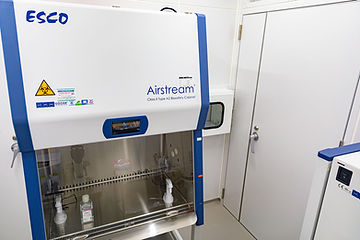
Our hospital is equipped with a cell culture processing room (CPC). Cell culture and PRP production are possible in our in-house CPC, which has been approved by the Ministry of Health, Labor and Welfare. In addition, our experienced cultivators are equipped with the latest equipment, including PCR machines and measuring instruments, to provide patients with stable, high-quality cells. Inside the CPC, we have established a hygiene management system that complies with the P2 level set by the government, including thorough sterilization with germicidal lamps and prevention of backflow of air inside and outside with HEPA filters.
Our CPC has been assigned a facility number (FC3250034) by the Ministry of Health, Labour and Welfare in accordance with the Act on Ensuring the Safety of Regenerative Medicine, etc.
Treatment in a private room
Treatment is carried out in a private room to ensure patient privacy.


Risks and Side Effects
side effects
Because PRP therapy uses the patient's own blood, the risk of rejection or serious side effects is considered extremely low.
Possible side effects that have been reported include the following:
Swelling, redness, and pain at the injection site
Temporary fever and fatigue
Allergic reactions
Changes in physical condition such as headaches, dizziness, and nausea
If you have any concerns or changes in your physical condition, please consult your doctor immediately. Our clinic provides safe and secure regenerative medicine through pre-treatment counseling and follow-up after treatment.
About this treatment
Unapproved drugs, etc.: The drugs used in this treatment are unapproved drugs that have not been approved under the Pharmaceuticals and Medical Devices Act.
Acquisition route, etc.: This drug is dispensed legally in-house (with some outsourcing).
Availability of other drugs approved in Japan: There are no other drugs approved in Japan with the same ingredients or properties.
Information on safety in other countries: No significant safety issues have been reported in other countries.
These products are not eligible for relief under the Pharmaceutical Adverse Reaction Relief System or the Biological Product Infection Relief System.
Pricing & Plans
This treatment is an elective medical treatment. Since elective medical treatment is not covered by the public insurance system, you will be responsible for all medical expenses.
For patients overseas
If patients residing overseas wish to visit our hospital for medical examination or consultation, in order to ensure smooth and safe medical treatment, as a general rule, they will be asked to complete the procedures through a medical coordination company.
There are separate fees for those coming to Japan from overseas for treatment.
For more information, please contact our International Department.